Triumph TR3 Review
What the magazines made of the TR3 when it was new, from *Motor Sport*'s show report of 1955 to the American test of the facelifted car in 1958: value, brakes and a tough engine, against draughts, a lively tail and a firm ride.
About the pictureA small-mouth TR3 like those the magazines tested in 1956 and 1957, on later alloy wheels; not one of the test cars.
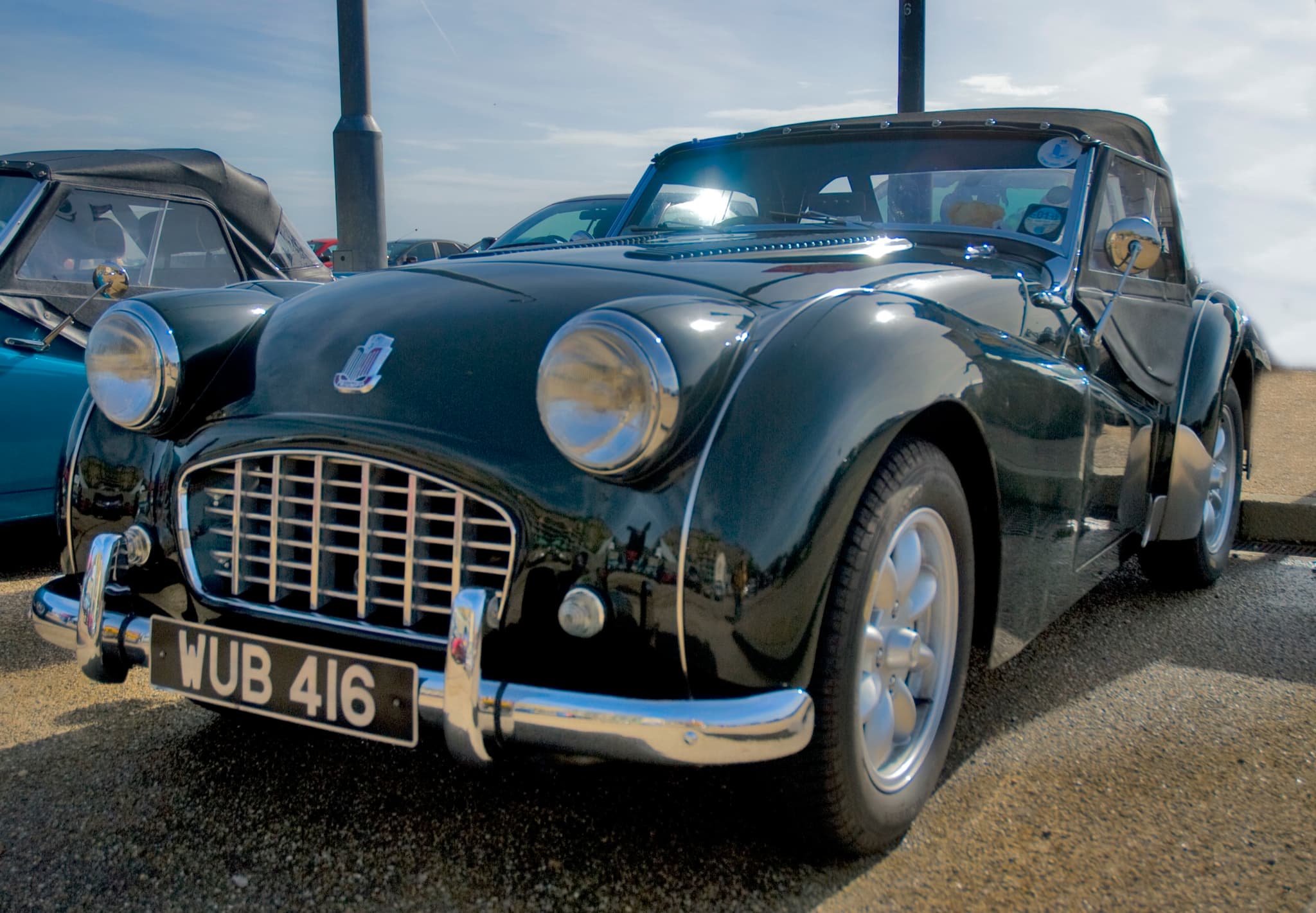
The TR3 arrived with a reputation to live up to. The TR2 had already won rallies and races, and when Motor Sport reported on the London Motor Show of October 1955 it judged the new car the best value among the sports cars on sale. In the three years that followed, British and American magazines tested it, and the tests and reports read agree on most things: a fast, tough and inexpensive car with outstanding brakes, let down by draughty sidescreens, a firm ride and a tail that could step out on a poor road.
Their figures, test by test, are in the specifications, and how the TR3 measured up against the cars sold beside it is on Rivals; this page gives what the testers said.source 1source 2source 3source 4source 5source 6source 7source 8
At the launch, 1955–56
The first American test was Karl Ludvigsen's for Sports Cars Illustrated, in March 1956, of the importer's first TR3: a hard-top with overdrive, wire wheels and an occasional rear seat, still on drum brakes. He found a car "designed to provide a maximum of performance at minimum cost". It understeered strongly, but when the tail went it moved out in a way he called entirely predictable and controllable, and he judged the handling "nearly foolproof". He thought the ride quite good, though the short wheelbase and the suspension settings brought some pitching over big bumps; the gearchange was "a delight to handle", and the rear curtain holder was "a particular elbow-knocker". The hard-top, he warned, did not make the car a coupé.
In October Motor Trend published its test of a standard TR3. Its inside rear wheel lifted and spun under power in corners, and the magazine recommended the competition springs and dampers (shock absorbers), which cost little; the seats were "not overly comfortable on long trips", and the bonnet (hood) and boot (trunk) opened only with a separate T-shaped key. None of that outweighed the price:
The Triumph TR-3 isn't the fastest car in the world, but it's sure a bargain at its price.
The disc-braked car, early 1957
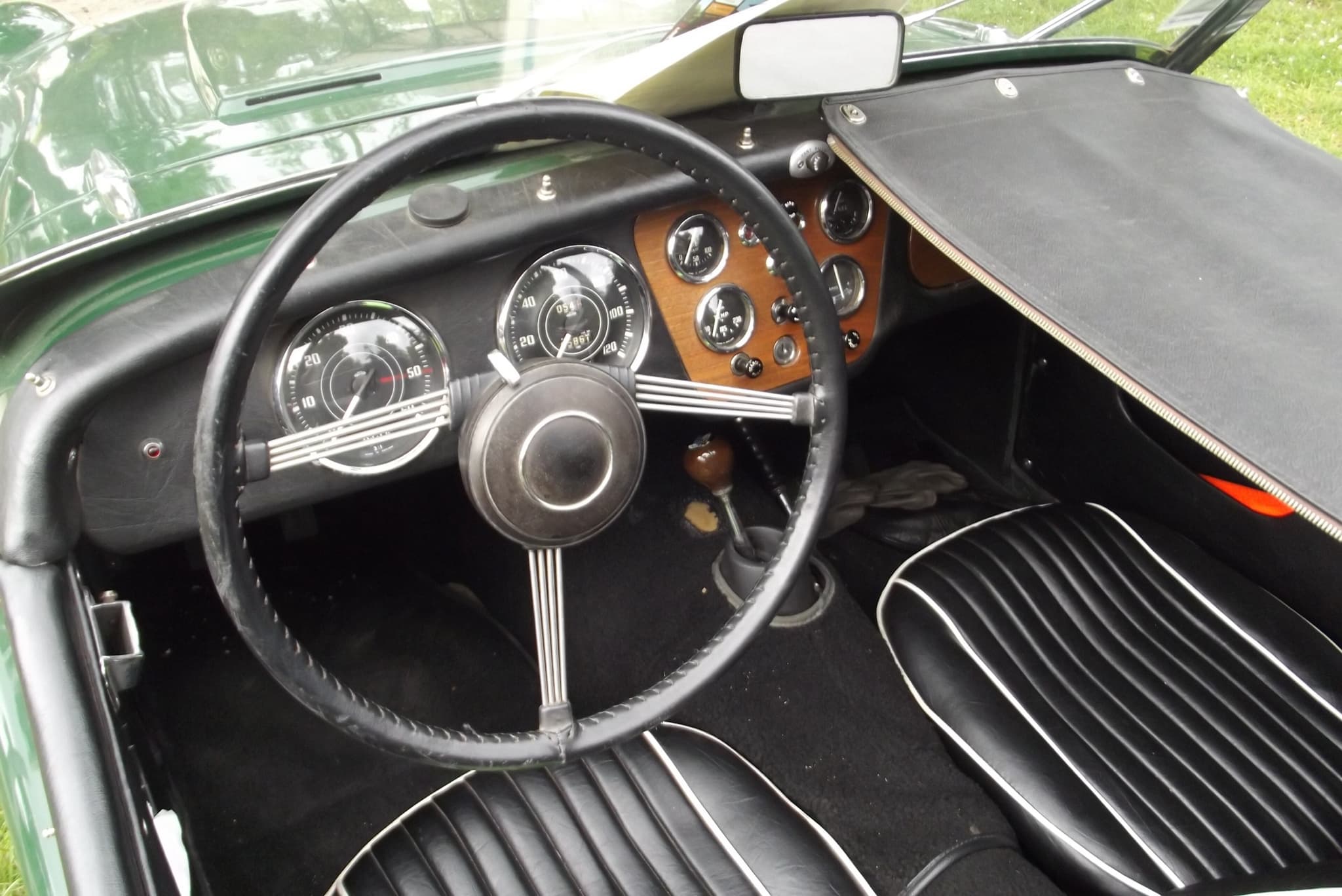
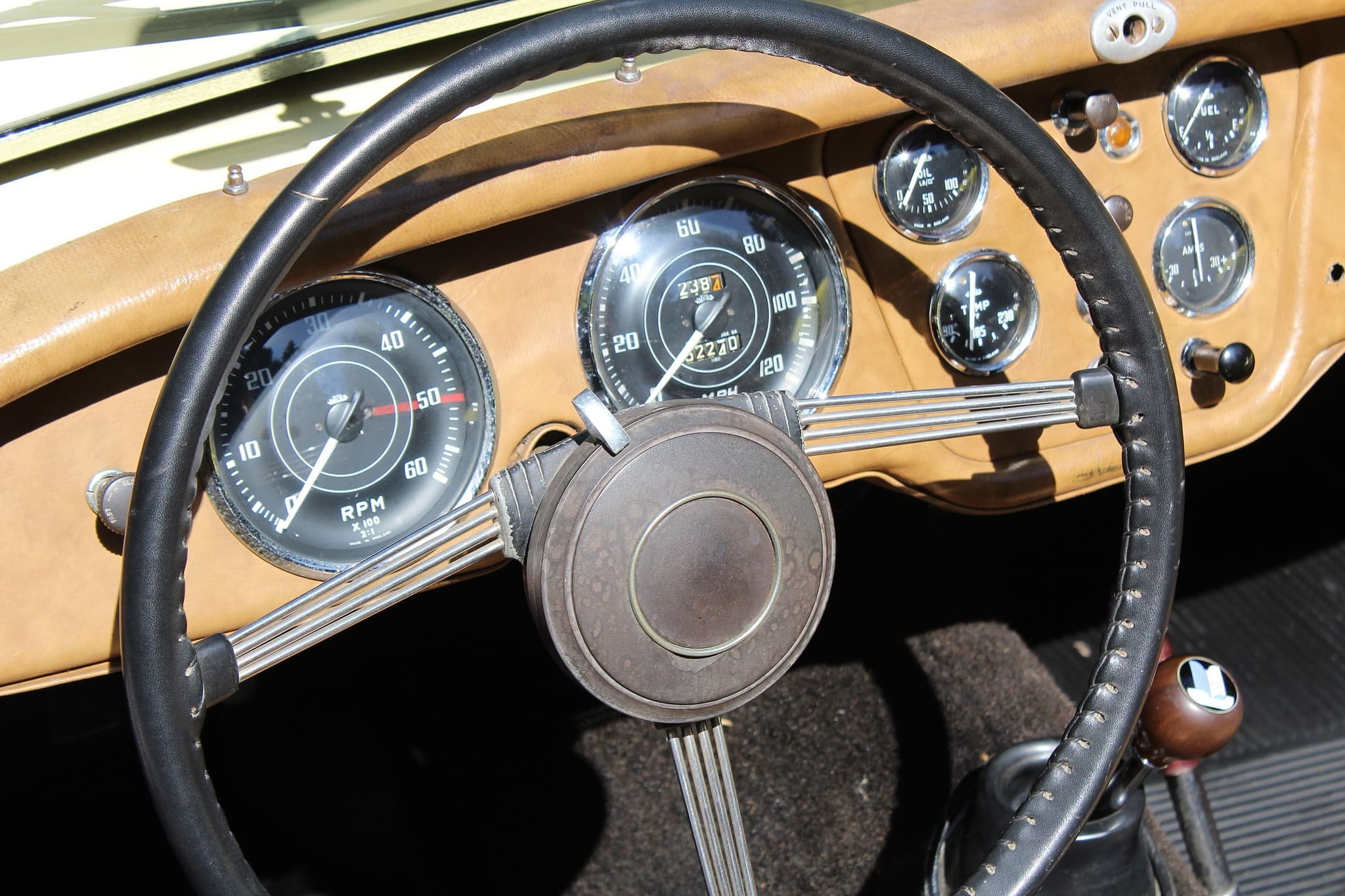
SKV 656, The Autocar's test car for 11 January 1957, was a disc-braked hard-top with overdrive and wire wheels, and the magazine drove it in Belgium. Its verdict on the brakes was unreserved: "One of the few real innovations of recent years has been the application of disc brakes", it wrote, and in hard use it found "never a trace of fade". It liked the smooth engine, with its "reputation for economy and long life", and the high-geared steering, which made corrections easy; but on poor surfaces the back of the car was less steady than the TR2's had been. Its car also broke its rear axle during the test, when the crown-wheel bolts sheared, which the magazine called "a freak fault"; the Standard and Triumph concessionaires in Belgium sent a replacement.
For Sports Cars Illustrated's April issue Ludvigsen tested a disc-braked TR3 and set out to make the discs fade: on a winter's day he made 10 emergency stops, one after another, from 97 km/h (60 mph):
Discs were crackling hot, linings smelled to high heaven, but the darn TR3 stopped anyway.
He found moderate understeer this time, but warned that "the transition from tracking to sliding can be sudden and choppy", and with the soft top up the sidescreens still left a gap at the back that let the weather at the driver's elbow. Of the heating he wrote: "It's definitely no coupe".source 2source 5
Motor Sport and Motor Trend, 1957
The TR3 was not a car for top-speed tables. In March 1957 Motor Sport left it out of a survey of cars that could exceed 161 km/h (100 mph), because it "would require Le Mans mods. to meet our maximum-speed requirement".
Bill Boddy tested a hard-top with overdrive for the magazine's July issue. He called the brakes "superlative", "foolproof and fade-free", stopping the car "without anxiety with a mere caress of the pedal". The gearchange was apt to be harsh when the synchromesh was beaten, the seats were not particularly comfortable, rust was forming on the fittings by 16,000 km (10,000 miles), and the steering he found "rather 'dead'", with a tendency to dart about. The price had risen since the TR2, but the car was "still definitely in the value-for-money class", and he ended on its sales:
It is selling splendidly in dollar-markets and should continue to do so for a long time to come, especially if it could be re-styled, because proven reliability and economy allied to potency are qualities sought after in all parts of the world.
Wayne Thoms tested a TR3 for Motor Trend's September issue. He called the engine "one of the sturdiest, most trouble-free and reliable engines going today", granted that "some consider its body lines uninspired", and wrote that "a few hundred miles behind the wheel" made him wonder why anyone could want a bigger engine in a sports car. His brake test raised smoke from the sixth stop, with "a very little fade and a slight swerve to the left". His summing-up was short: "we liked the TR-3".source 10source 3source 8
The facelifted car, 1958
Looking back on 1957 in January, Boddy wrote that the engine gave "the impression that it is indestructible" and that the gearchange was about the best there was.
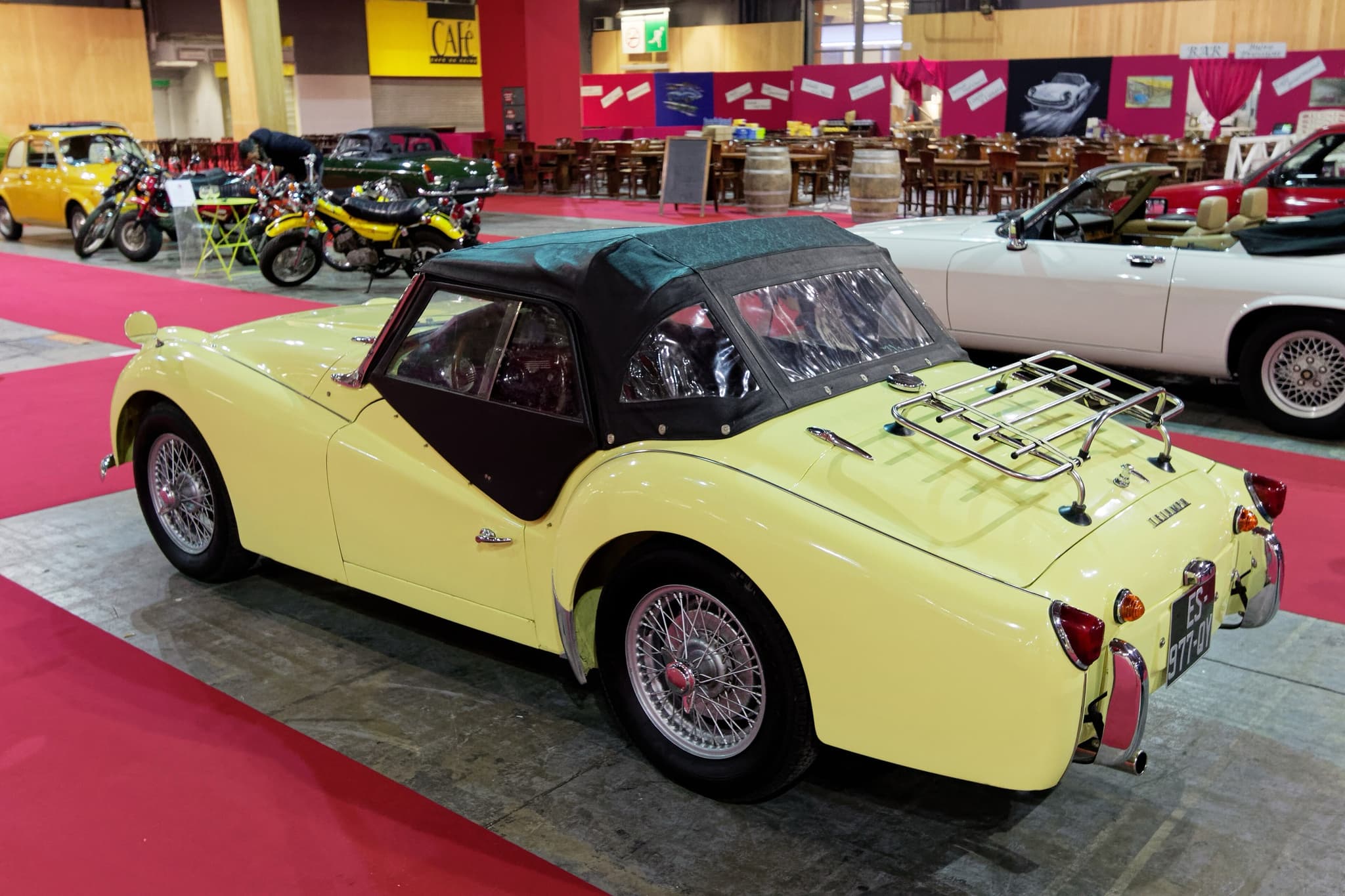
Len Griffing tested a TR3A, which Standard-Triumph's American company sold as the TR3 of the 1958 model year, for Sports Cars Illustrated's March 1958 issue, a roadster with the 4.11 axle and no overdrive. "The appearance is a lot smoother because of these changes", he wrote; the brakes, after more than 10 stops, left "absolutely nothing to be desired", and on snow at Lime Rock the car spun but stayed, he said, always under control. His complaint was the old one: the flat side curtains sat badly against the curved doors and let in draughts. No source read gives a British magazine's test of a TR3A, or any magazine's test of a TR3B.source 11source 6
What the testers agreed on
Read together, the tests agree on more than they differ. The value for money comes up in test after test, and every test of a car with disc brakes praised them. The engine was smooth, economical and, in Boddy's word, seemingly indestructible, and the overdrive on three gears, which made seven forward speeds, was liked in every test that had it.
They agreed on the faults too. The sidescreens let in draughts; on rough roads the short car rode firmly or pitched; the seats tired their occupants on long runs; and the bonnet and boot needed the special key. Above all, the tail could step out on a bumpy bend:
The car will get from A to B remarkably quickly, but care is desirable if the tail is not to skip out occasionally, or bump-skid on second-class roads.
Some of those faults outlasted the facelift: the draughts that Ludvigsen met in 1956 were still there for Griffing in the TR3A two years later.source 2source 3source 4source 5source 6source 7source 8
Sources
Every source the site cites is on the sources page.
- Primarymade at the time, by the maker or by people who were there
- Uncheckedencyclopaedias and enthusiast sites: cited beside a good source, named in the sentence, or marked Unchecked
- Motor Sport, "Sports and high-performance cars at Earls Court", with the list "Sports Cars Costing Under £1,000 Inclusive of P.T.", Nov 1955, p. 16, p. 16; p. 16, Triumph stand 123. motorsportmagazine.com/archive/article/november-1955/16/sports-and-high-performance-cars-at-earls-court Primary
- The Autocar, "The Autocar Road Test No. 1622 — Triumph TR3 Hardtop", 11 Jan 1957, pp. 41–43, pp. 41–43; pp. 41–43 and the data panel. trvc.nl/wp-content/uploads/2016/11/road-test-TR-3-1957.pdf Primary
- Bill Boddy ("W. B."), "Triumph TR3 Road-Test", with the data panel "The Triumph TR3 Hard-Top" (p. 14), Motor Sport, Jul 1957, pp. 13–14, pp. 13–14. motorsportmagazine.com/archive/article/july-1957/13/triumph-tr3-road-test Primary
- Karl Ludvigsen, "Triumph gets a going over", Sports Cars Illustrated, Mar 1956, pp. 36–38, 56, pp. 36–38, 56; pp. 36–38. Primary
- Karl Ludvigsen, "Disc Braked TR-3", with the Standard-Triumph advertisement in the same issue, Sports Cars Illustrated, Apr 1957, pp. 16–19, 58, pp. 16–19, 58; pp. 16–19. Primary
- Len Griffing, "SCI Road Test — Triumph TR3", with the Standard-Triumph Motor Co. Inc. advertisement in the same issue, Sports Cars Illustrated, Mar 1958, pp. 30–31, 58, pp. 30–31, 58; pp. 30–31. Primary
- "P.S.", "The Triumph TR-3", Motor Trend, Oct 1956, pp. 29, 52, pp. 29, 52. Primary
- Wayne Thoms, "Triumph TR-3" (An MT Research Report), Motor Trend, Sep 1957, p. 36ff, p. 36ff. Primary
- Wikipedia (EN), "Triumph TR3", 2026, *The Motor*, 4 April 1956, as reported. en.wikipedia.org/wiki/Triumph_TR3 Unchecked
- Motor Sport, "Taking Stock", Mar 1957, p. 13, p. 13, the TR3 passage. motorsportmagazine.com/archive/article/march-1957/13/taking-stock Primary
- Bill Boddy, "My Year's Motoring", Motor Sport, Jan 1958, p. 11, p. 11. motorsportmagazine.com/archive/article/january-1958/11/my-years-motoring Primary