Keith Ballisat's Alpine TR3
Whereabouts unknown
Standard-Triumph's open two-seater of 1955 to 1962, built at Canley in Coventry, the last of them in Birmingham, and sold mostly abroad: the TR2 developed, with front disc brakes from 1956, in three versions, the TR3, the TR3A and the North American TR3B.
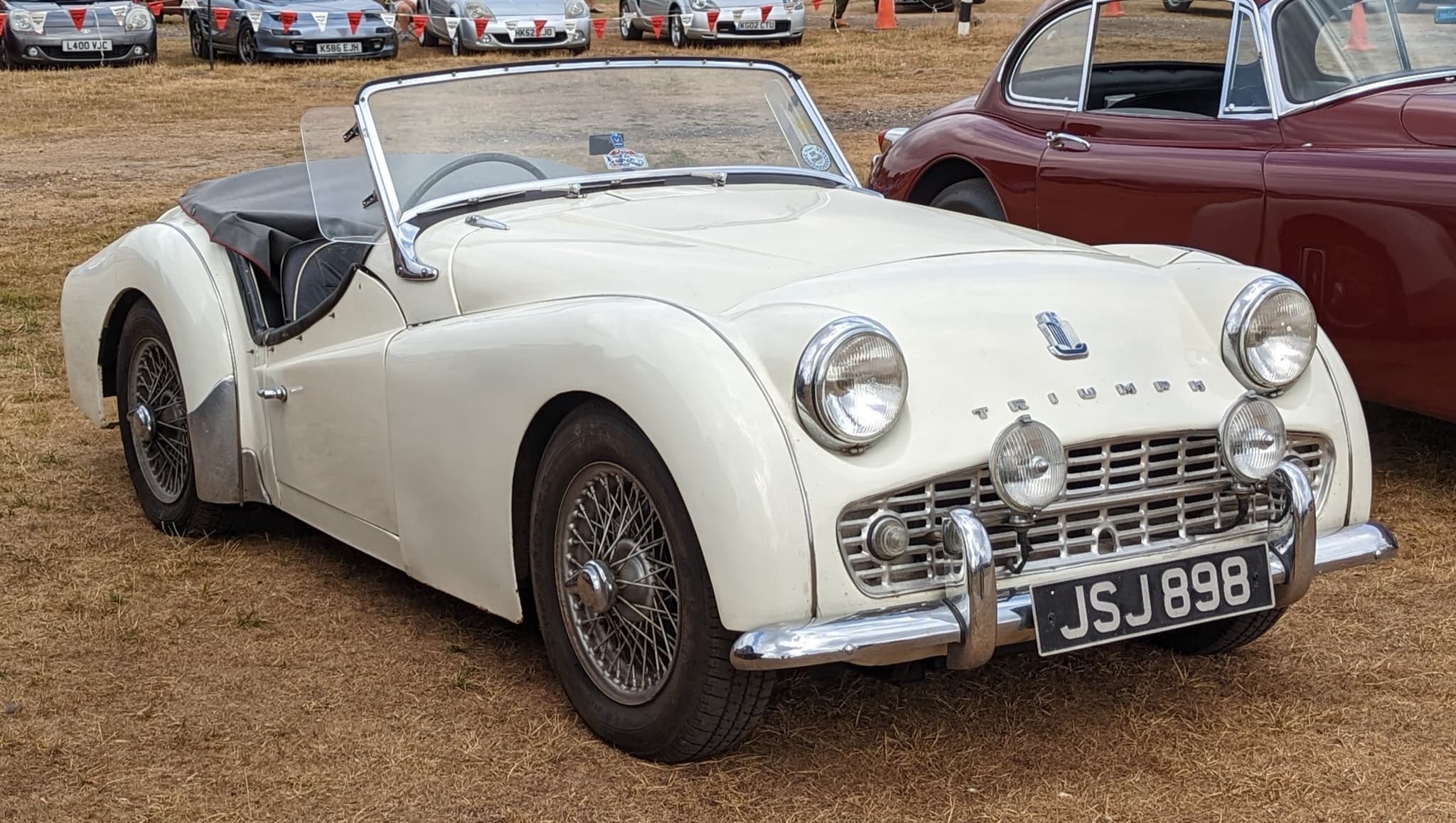
In the spring of 1957 Motor Sport went round Standard's works at Canley, in Coventry, and counted. TR3 bodies came from Mulliners in Birmingham with their seats already in; each engine was run on a test bed and each finished car taken out on the road. Standard's daily output was 45 TR3s, 40 Vanguard saloons (sedans), 190 Eights and Tens and 290 Ferguson tractors, so that TR3s now outnumbered Vanguards. The car was popular above all in America, and nine in ten were exported while British buyers waited three months for theirs.
The TR3 was the TR2 developed rather than a new car: an open two-seater on a separate chassis, with sidescreens in place of wind-up windows and a four-cylinder engine with wet cylinder liners. It was shown at the London Motor Show in October 1955, and from the autumn of 1956 it had disc brakes at the front, which the testers of the day singled out for praise. Canley built it, in two versions, until late 1961 or early 1962, the sources disagreeing on the last car; a final batch for North America was built in Birmingham during 1962. The history tells the whole story, and the works cars' rallies and races are on the racing page.source 1source 2source 3source 4source 5source 6source 7source 8
The TR3 of 1955 to 1957, the "small mouth" to its owners, wears its egg-crate grille nearly flush with the front of the car, has no handles outside its cut-away doors and ran on drum brakes until the autumn of 1956, when Girling front discs came in at commission number TS13046.
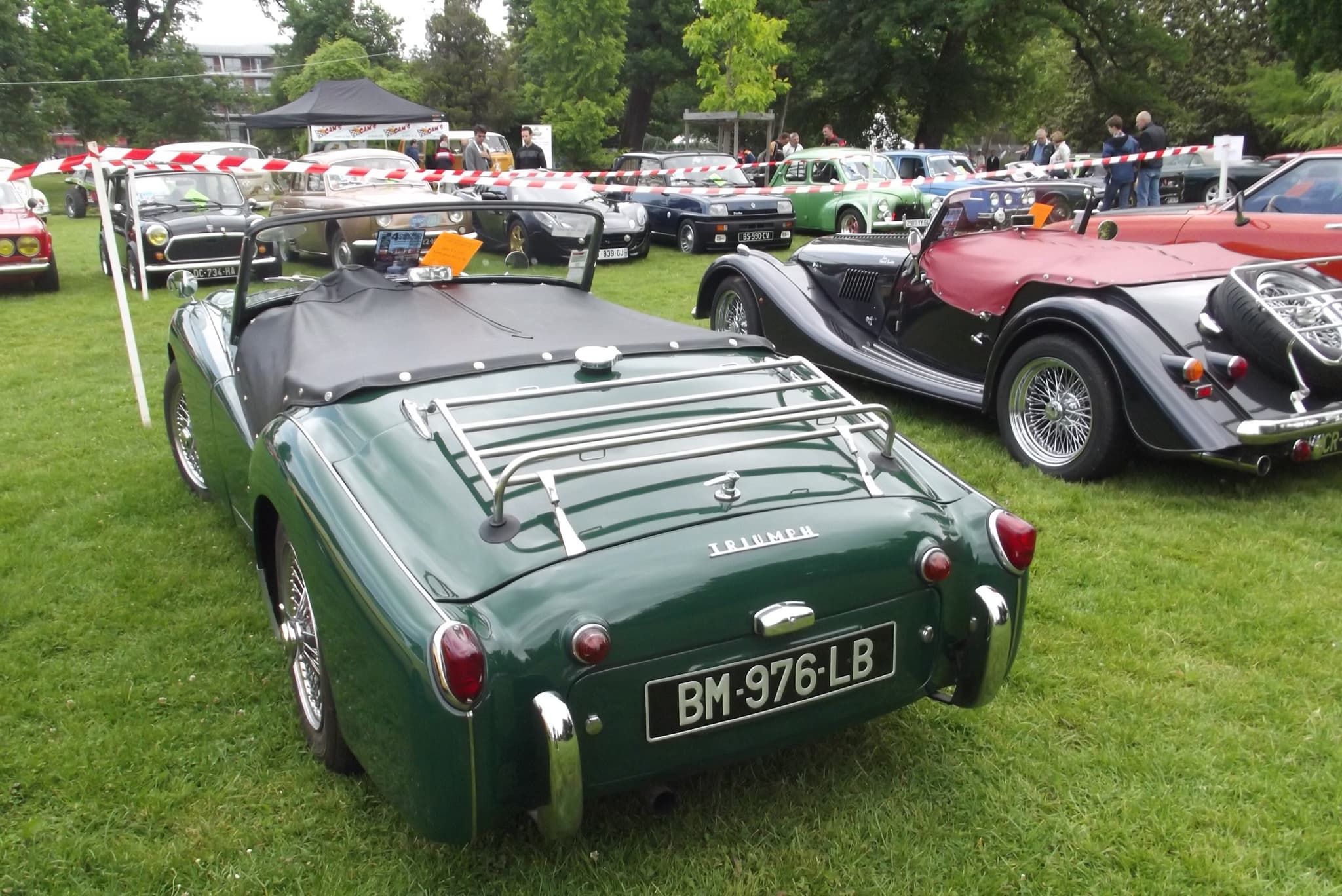
The TR3A is the facelift of September 1957: a full-width grille recessed in the mouth, the maker's name in capitals across the nose, handles outside the doors and a locking one on the boot (trunk), and overriders (bumper guards). Standard-Triumph's own advertising went on calling it the TR3; "TR3A" was the name that Motor Sport and the American factory club's newsletter were using by the end of 1958. It was the most-built of the three, and the first to be offered with the bigger engine, from 1959.
The TR3B of 1962 was a last run of sidescreen cars for North American dealers, built in Birmingham by the Forward Radiator Company in two series: TSF cars with the TR3A's engine and TCF cars with the bigger engine of the new TR4, both with the TR4's gearbox (transmission), synchromesh on all four gears. Outside it looks like a late TR3A. It is not to be confused with the prototypes of about 1960 called the TR3 Beta, which one man who worked on them remembers being known as "TR3B" too.source 3source 9source 10source 11source 5source 6source 4
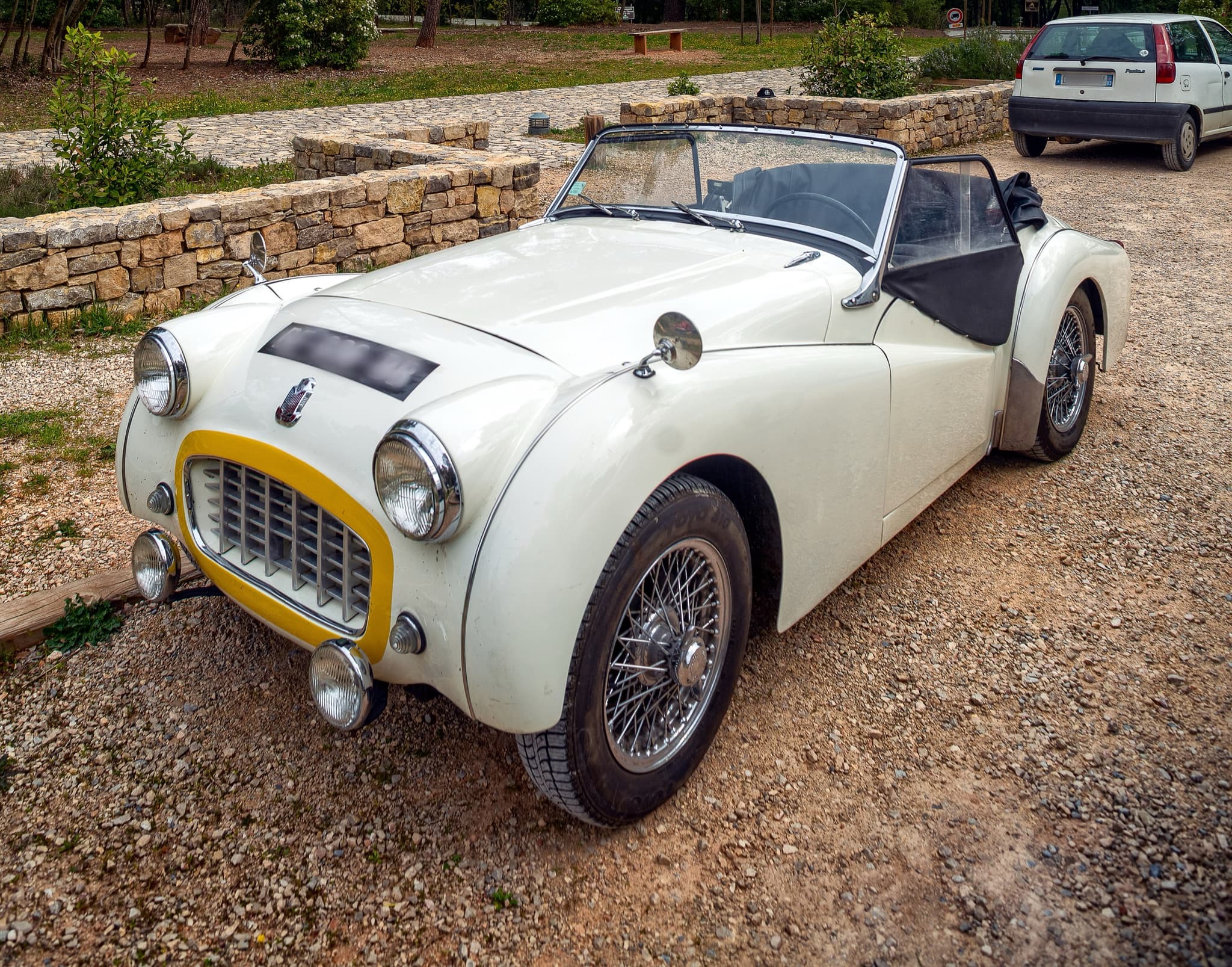
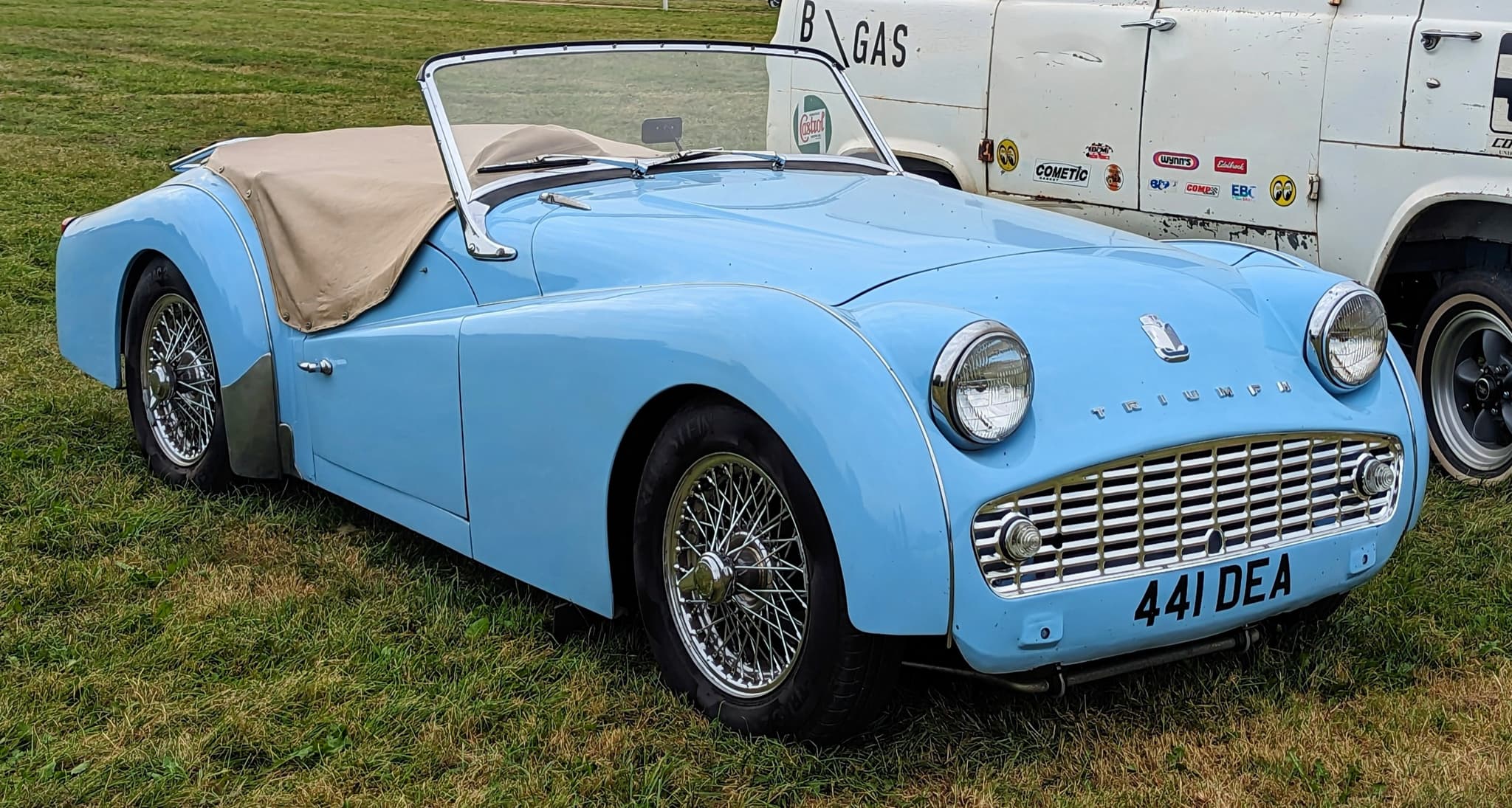
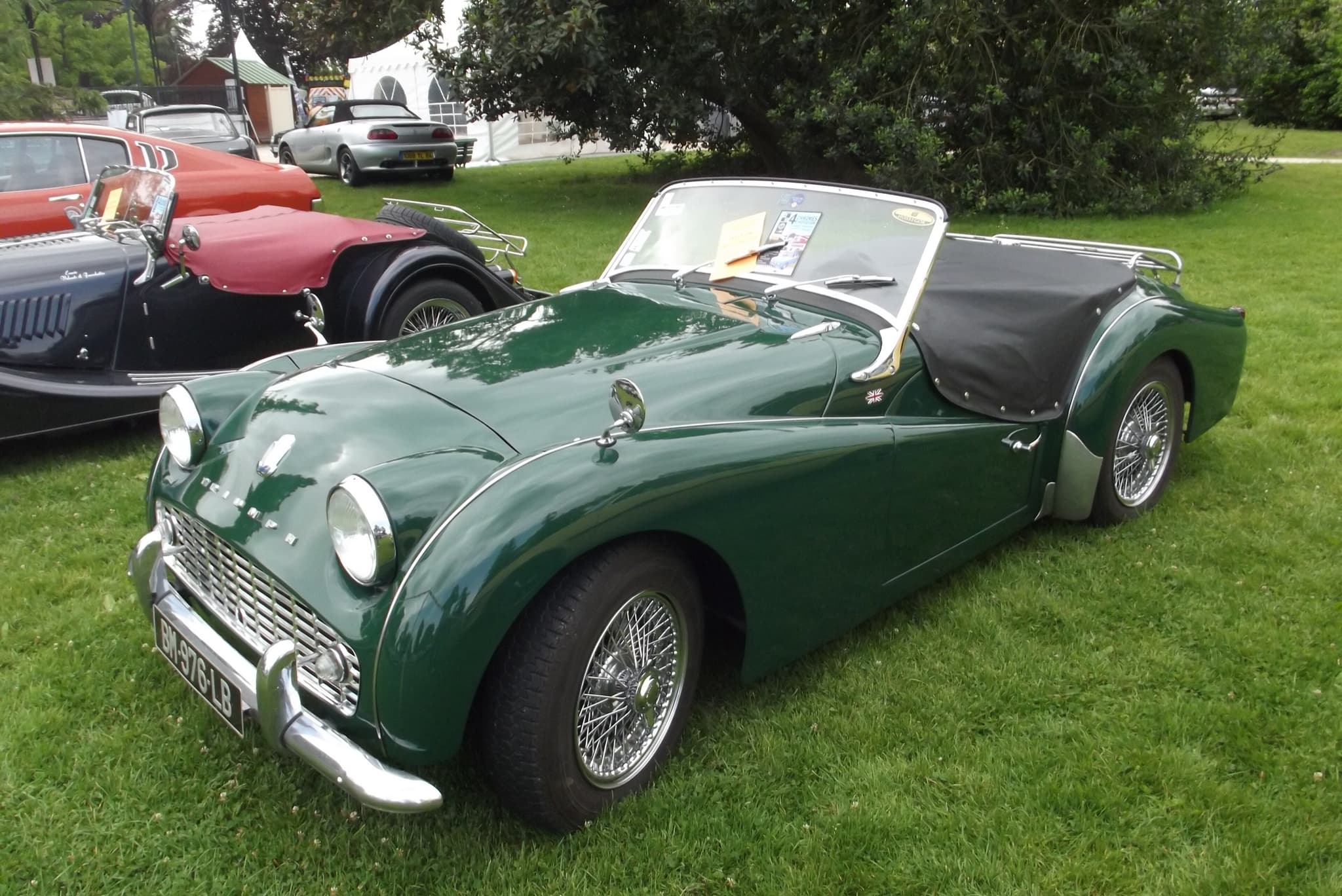
The TR2, built from 1953, turned into the TR3 in October 1955 without a break in the commission numbers: the last TR2 was TS8636 and the first TR3, by most accounts, TS8637. The new car kept the TR2's chassis, body and engine and added a new grille, bigger carburettors and more room behind the seats, where an occasional seat could be fitted at extra cost.
Its successor, the TR4, was announced in September 1961 with a full-width body by Giovanni Michelotti and wind-up windows. The TR3B was built beside it in 1962 for the North American dealers, who, the TR Drivers Club and Dwinger say, doubted the new car. How one car became the next is told on the history page.source 3source 2source 16source 6source 17source 18
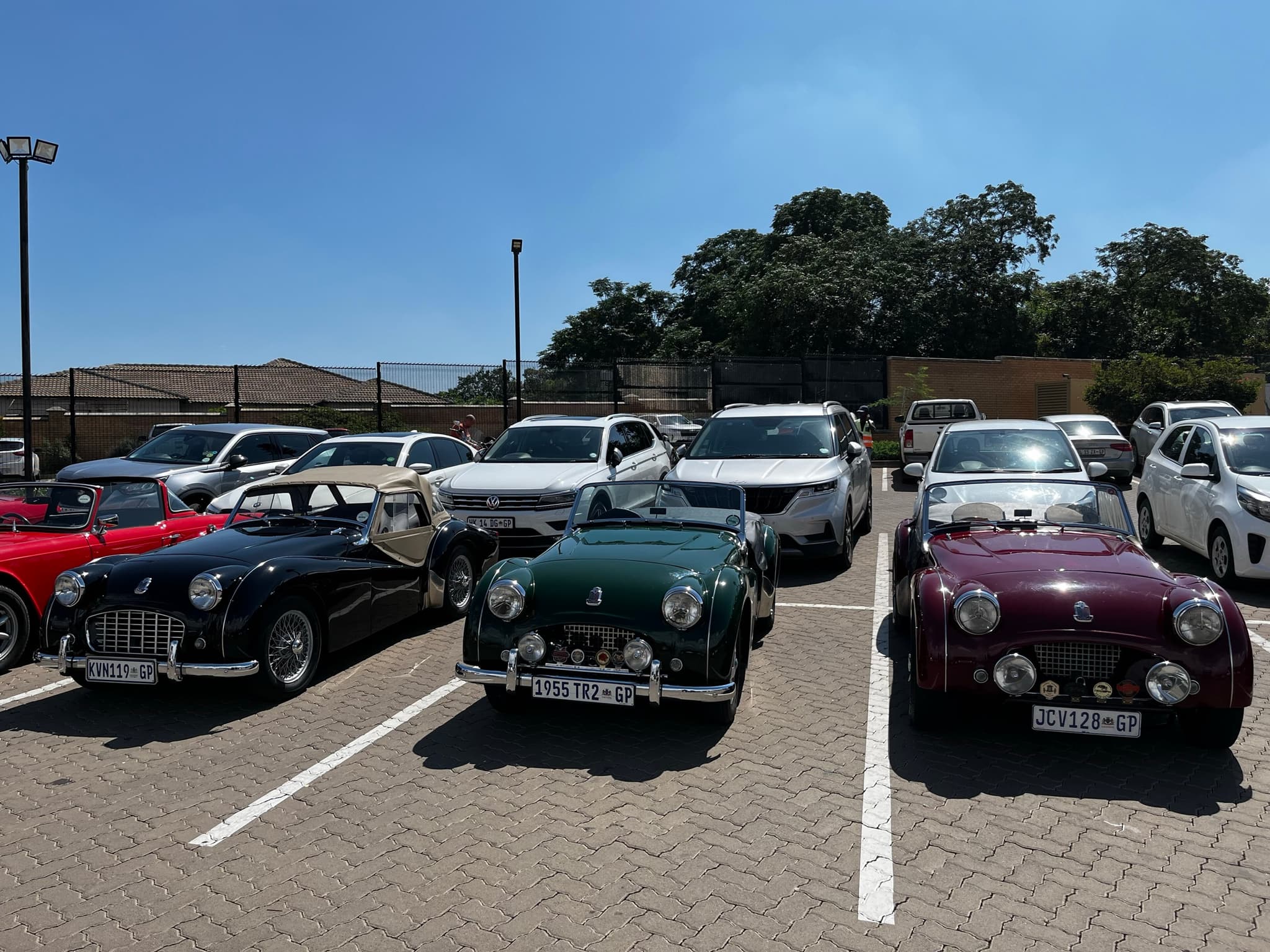
In May 1957 Motor Sport visited three factories for one article and treated their sports cars as a set: the MG MGA, the TR3 and the Austin-Healey 100-Six. In the British price lists of 1955 and 1959 the TR3 cost more than the MGA and less than the big Healey. How they compared in price, power, numbers and results is on Rivals.
The press of the day kept coming back to its value and its toughness. Motor Sport's show report of November 1960 wrote of drivers "who want an almost unbreakable car which will stand up to terrific punishment". Bill Boddy put the value argument most plainly in the same magazine, looking back on the sports cars he had driven in 1957:
I regard this as THE finest value-for-money in the sports-car field and because it is such excellent value I can readily forgive certain minor crudities and failings.
The testers' verdicts, magazine by magazine, are on the road tests page.source 1source 2source 19source 20source 21
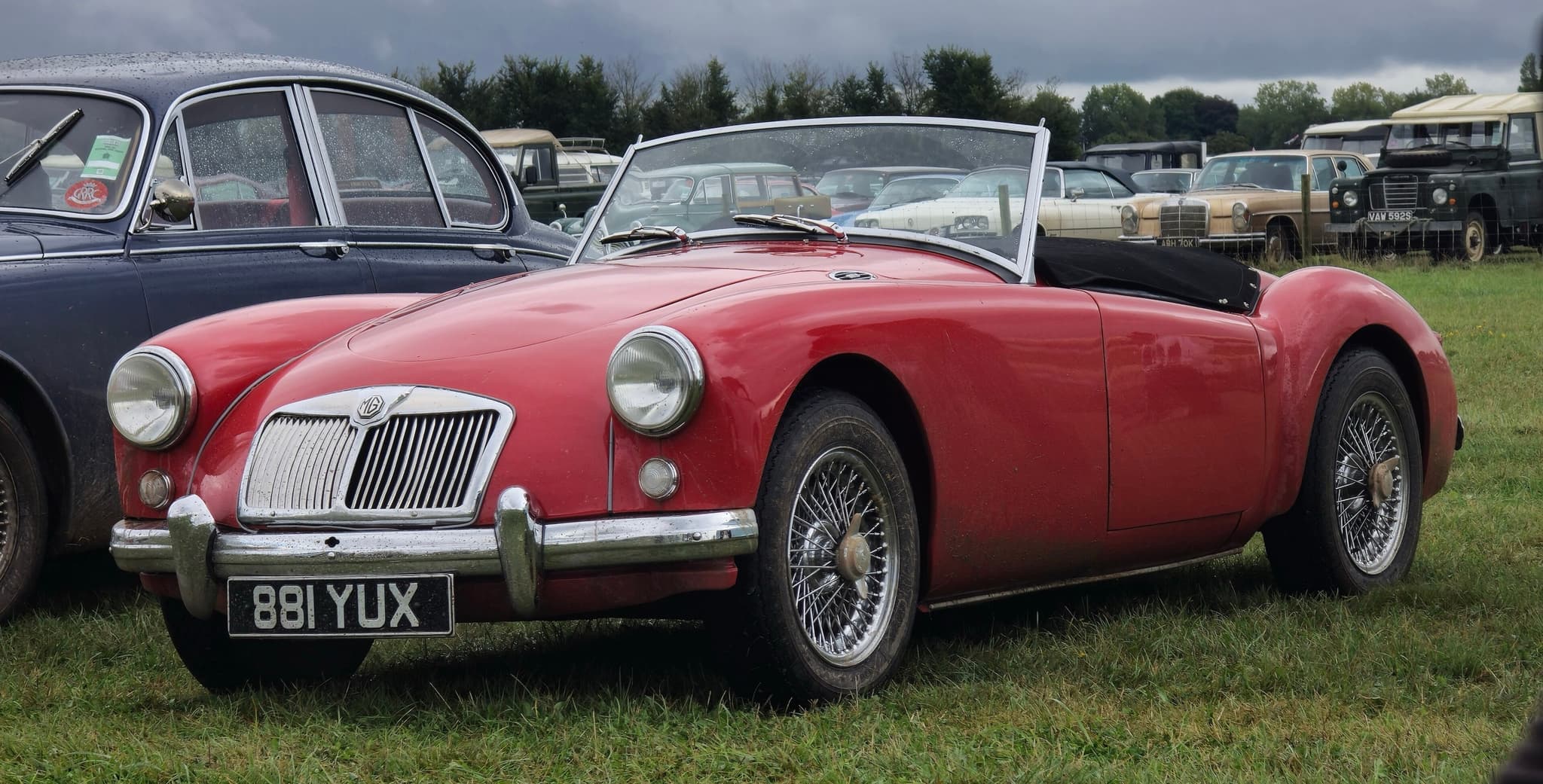
Sources for Versions
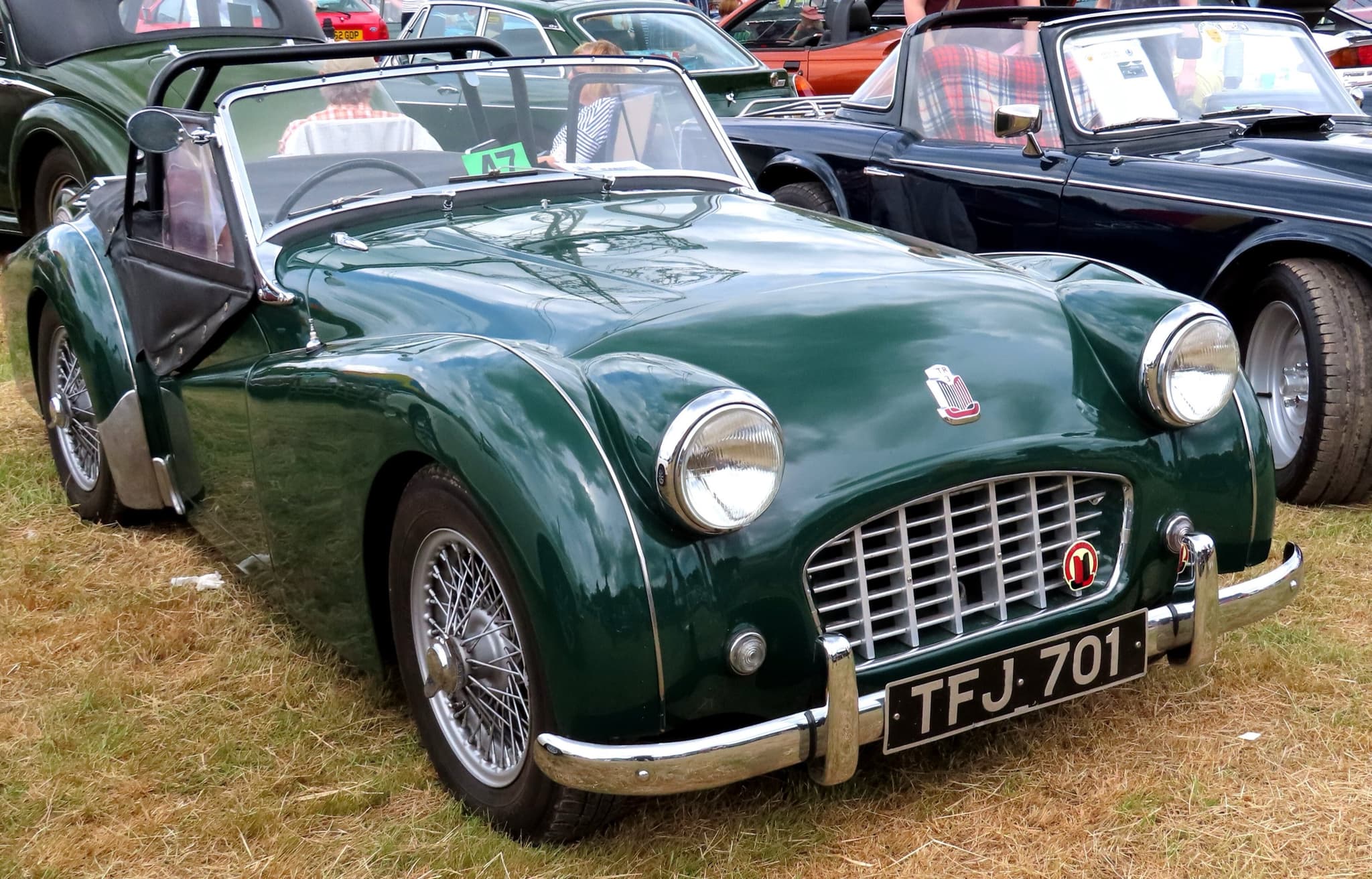
1955–1957
13377 built or 13337 or nearly 17,000
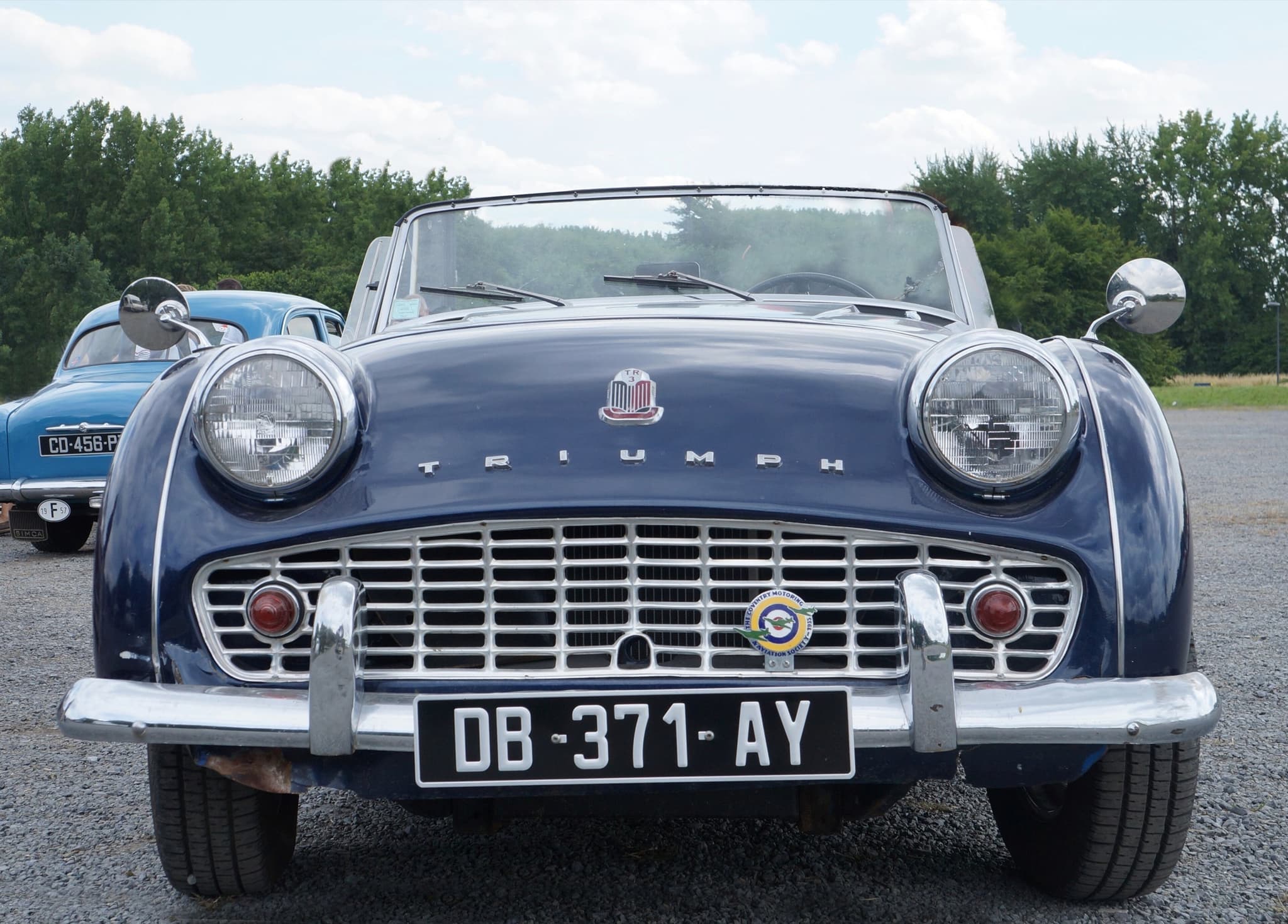
1957–1962 · 1991 cc
58236 built · 58309
1962–1962
3331 built · 530 + 2,804 = 3,334
Pictures, top to bottom: kitmasterbloke, CC BY 2.0; PIERRE ANDRE LECLERCQ, CC BY-SA 4.0; Handelsgeselschaft, CC BY-SA 4.0.
Whereabouts unknown
Whereabouts unknown
Whereabouts unknown
Survives
Survives
Whereabouts unknown
Built 1959
Whereabouts unknown
Built 1959
Whereabouts unknown
Built 1959
Whereabouts unknown
Works Triumph rally driver of 1958–59. With Alain Bertaut he won a Coupe des Alpes on the 1958 Alpine Rally in a works-prepared TR3, 1st in class and 4th overall and fastest up the Stelvio, and Shell's film of that rally follows his TR3 down the passes. In 1959 he won his class on the Tulip Rally and was 2nd overall "by only a few precious seconds", was 2nd in class and 8th overall on the Liège–Rome–Liège with Bertaut, and, in a Herald, drove in one of the two Triumph teams that took the first two manufacturers' team awards on the RAC Rally.
engineer
Standard-Triumph engineer. By Frank Marsden's account, the two TR3 Beta prototypes of about 1960 were built by his team after its move from Radford to Fletchamstead North.
Maurice Gatsonides's co-driver in a works Triumph TR3 on the 1958 Monte Carlo Rally: 1st in the 1,300–2,000 cc class and 6th overall, the only crew from The Hague start to finish.
chief stylist, stylist
Car stylist. According to the Standard Motor Club, he was born in Liverpool in 1900, was chief stylist of the pre-war Triumph company from 1934 and formed Standard's first styling department after the war. He drew the Standard Vanguard, the TRX and the 20TS, from which the TR2 was developed; in 1978 J. R. Davy credited him with the Renown, the Vanguard and the TR2. After a complete falling-out with the chief engineer, Ted Grinham, he resigned after the 1955 Motor Show, later took small commissions (among them bodywork for the Ferguson P99), retired to Devon and died in 1983.
Drove TR3 No. 20 at the 1959 Sebring 12 Hours with Robert Samm and Moore: after kerb damage it finished 48th, 6th in the 2-litre GT class.
French driver. Keith Ballisat's co-driver in a works Triumph TR3 on the 1958 Alpine Rally, when they won a Coupe des Alpes, 1st in class and 4th overall, and on the 1959 Liège–Rome–Liège, 2nd in class and 8th overall. In 1964 he drove a Standard-Triumph Spitfire with Jean-François Piot in the Reims 12 Hours.
With P. Craven, 3rd in the 1,300–2,000 cc class in a TR3 on the 1958 Monte Carlo Rally.
British racing driver. He drove one of the three works TR3S twin-cams at Le Mans in 1959, No. 26 with Mike Rothschild; at Sebring in 1963 he and Rothschild won the GT class up to 2.5 litres in a Standard-Triumph TR4, 22nd overall; and he drove works Spitfires at Sebring and Le Mans in 1965.
With P. Bolton, 3rd in the 1,300–2,000 cc class in a TR3 on the 1958 Monte Carlo Rally.
managing director
Managing director of the Standard Motor Company, later Standard-Triumph, from early 1954, when Motor Sport saw "young Alick Dick" set up "as head of the Standard empire" on Sir John Black's retirement, until Leyland's takeover in 1961. The TR3 and most TR3As were built under him. Michelotti's arrival is told two ways: Graham Robson says he was introduced through Raymond Flower and hired on Harry Webster's recommendation with Dick's approval; G. William Krause says the TR3 "Dream Car" followed a chance meeting between Dick and Michelotti at a motor show.
Robert Leidgens's co-driver in the factory TR3 team on the 1958 Liège–Rome–Liège: 3rd in the over-2-litre class and 6th overall.
Nancy Mitchell's co-driver in the works TR3 hard-top, No. 300, in the 1957 Mille Miglia; it retired with radiator trouble.
Drove TR3 No. 236 with Laine in the 1956 Mille Miglia: 94th overall and 2nd in the 2-litre production sports class.
Rally and racing driver. In TR2s he finished the 1954 Mille Miglia with Ken Richardson (27th in racingsportscars' results; Motor Sport reported 28th at the time). In TR3s, one of five Coupes des Alpes on the 1956 Alpine Rally; with Marcel Becquart 6th overall and 1st in class on the 1958 Monte Carlo Rally; 2nd in class, 5th overall, on the 1958 Liège–Rome–Liège.
Drove TR3 No. 318 with Le Cornu in the 1957 Mille Miglia: 104th overall and 5th in the 2-litre GT class.
Maurice Gatsonides's co-driver in the factory TR3 team on the 1958 Liège–Rome–Liège: 2nd in the over-2-litre class and 5th overall.
One of the five Triumph TR3 drivers who won a Coupe des Alpes on the 1956 Alpine Rally: the five went unpenalised and took the first five places in the 1,600–2,000 cc class.
With Van Den Driesche, 18th overall and 4th in the 2-litre sports class at the 1956 Reims 12 Hours, in a Triumph that racingsportscars' list of TR3 results includes.
Drove Triumph TR3 No. 309 in the 1957 Mille Miglia; racingsportscars records a fatal accident.
Ken Richardson's co-driver in the works TR3 that retired from the 1956 Alpine Rally when a rear wheel came off.
With Jim Roberts, 26th overall and 3rd in the 2-litre GT class in a works TR3 at the 1958 Sebring 12 Hours.
The third driver, with Charles Kolb and Col. Fred Moore, of the Standard-Triumph TR3 No. 21 at the 1959 Sebring 12 Hours; it retired with valve-gear trouble half an hour from the finish.
One of the five Triumph TR3 drivers who won a Coupe des Alpes on the 1956 Alpine Rally: the five went unpenalised and took the first five places in the 1,600–2,000 cc class.
With Bob Oker, 36th overall and 5th in the 2-litre GT class in a works TR3 at the 1958 Sebring 12 Hours. The January 1958 entry list named him, as "Harold Hurtley", with Mike Rothschild; the result pairs Hurtley with Oker and Kimberly with Rothschild, the two names swapped between the same two cars.
Co-drove Mike Rothschild's Standard-Triumph TR3, No. 33, at the 1957 Sebring 12 Hours: 21st overall and 2nd in the 2-litre GT class.
Drove the works TR3S that ran longest at Le Mans in 1959, with Dick Stoop: it led the 2-litre class, 7th overall by SCI's account and 6th by the US newsletter's, until its oil pump drive failed less than two hours from the finish.
service manager, driver, team manager, founder, motorsport manager
American tuner, racer, team manager and author. He began racing in 1952 in an MG TD and opened a tuning shop in Salt Lake City in 1953. The TSOA Newsletter of October 1955 reports an "R. Kastner" winning two races in a TR2 at Cheyenne, Wyoming. In 1959, by the TSOA Newsletter's account, he won the Pacific Coast Class E Championship, the California Sports Car Club championship and the Motoracing West Coast Point Championship in a TR3 he drove to work and to races. After preparing three TR4s that finished 1st, 2nd and 4th in their class at Sebring in 1963 he set up Triumph's US competition department (by his account, no other foreign maker had one there) and wrote Triumph's competition preparation manuals. He finished three of the works TR4s for the 1964 Shell 4000, built the TR4A Super Stock in which Charlie Gates won the 1965 SCCA D Modified title, captained the TR4A team whose cars were 1st, 2nd and 3rd in class at Sebring in 1966, and in 1968 built the TR250K, a prototype on a TR4A chassis, with Peter Brock for Sebring. He was the factory team's guest at Le Mans in 1964 and owned the Macau Spitfire from 14 April 1966 to 2 February 1968. He left Triumph at the end of 1970 and was inducted into the British Sports Car Hall of Fame in its first class, 2017.
One of the five Triumph TR3 drivers who won a Coupe des Alpes on the 1956 Alpine Rally: the five went unpenalised and took the first five places in the 1,600–2,000 cc class.
With Mike Rothschild and Lott, 20th overall and 2nd in the 2-litre GT class in a works TR3 at the 1958 Sebring 12 Hours.
Shared TR3 No. 21 with Col. Fred Moore at the 1959 Sebring 12 Hours; it ran without a hitch until valve-gear trouble, a broken rocker-pedestal stud, half an hour from the finish.
Drove TR3 No. 236 with Fauvel in the 1956 Mille Miglia: 94th overall and 2nd in the 2-litre production sports class.
Drove TR3 No. 318 with Giraud in the 1957 Mille Miglia: 104th overall and 5th in the 2-litre GT class.
Drove a factory TR3 on the 1958 Liège–Rome–Liège with C. DuBois: 3rd in the over-2-litre class and 6th overall.
With Mike Rothschild and William Kimberly, 20th overall and 2nd in the 2-litre GT class in a works TR3 at the 1958 Sebring 12 Hours.
engineer
Standard-Triumph engineer who worked on the TR3 Beta. His account, published by the TR Drivers Club in 2015, is the source of the view that "the TR3 BETA came first" and that the TR4 then used its chassis and running gear, and of the works' own name for the project, "TR3B".
Keith Ballisat's co-driver on the 1959 Tulip Rally: 1st in Class H and 2nd overall in a TR3.
British driver. With Maunsell he was 17th in the 1954 Tourist Trophy in a TR2, the best of the six that finished, and he retired in the 1955 race. With Desmond Titterington, 2nd in class and 8th overall on the 1958 Alpine Rally in a works TR3.
stylist
Turin car stylist. He began his career in 1937 as an apprentice at Stabilimenti Farina; according to carrozzieri-italiani he opened his own design studio in Turin in 1949, the first in Italy devoted only to car design; the TSOA Newsletter of 1966 also dates the studio to 1949. His first contact with Standard-Triumph came in 1957: Harry Webster's obituary in the Telegraph says Webster "discovered" him, while Graham Robson says he was found through Raymond Flower and hired on Webster's recommendation with Alick Dick's approval. His first Triumph design was the one-off TR3 "Dream Car" on a TR3 chassis, shown at Geneva in 1957 according to later accounts; Krause says it followed a chance meeting with Alick Dick at a motor show. He went on to design the Italia (1959–62) on TR3A and TR3B running gear. On his own initiative he drew a one-off body for a BMW 507 chassis, shown at the Turin show in 1959, which BMW has owned since 2005. He styled the Herald (1959), whose separate chassis made the Spitfire possible; answering Webster's idea of a "Herald sports car", he built a single prototype in 1960, code-named "Bomb", and later restyled the car as the Mk IV of 1970. For the TR he styled the prototypes Zest (1958) and Zoom (1959) and the TR4 of 1961, which joined Zest's nose to Zoom's tail and kept Zoom's hardtop with its lift-out panel; the TR4A, TR5 and TR250 kept that body with new detail, and its centre section on the TR6 (1969), whose new front and rear Karmann designed because he was busy. According to his son Edgardo, his work for Triumph ended in the late 1970s with a restyle of the TR7 from coupé to spider; he died in January 1980. No source read links him to the Le Mans or Macau competition bodies.
Drove a works Triumph TR3 hard-top in the 1957 Mille Miglia: "the actual Alpine Rally car" of 1956, prepared with a 114-litre (25-imperial-gallon) tank, a 4.1 axle and Le Mans lamp reflectors. It retired with radiator trouble.
Racingsportscars' driver page for him lists him in both of the entrant's TR3s at the 1959 Sebring 12 Hours: No. 20, with Samm and Bentley, 48th, and No. 21, with Kolb and Hobbs, which retired. The US factory club's newsletter named "Col. Fred Moore" with Charles Kolb in No. 21, which ran without a hitch until valve-gear trouble half an hour from the finish.
Drove TR3 No. 316 in the 1957 Mille Miglia: 155th overall and 7th in the 2-litre GT class.
Racing driver. With Ed Pennybacker he won the 2-litre GT class at the 1957 Sebring 12 Hours in a Standard-Triumph TR3, 19th overall; the US factory club's newsletter later recalled his "record non-stop driving marathon of 11 solid hours". The next year, with Harold Hurtley in the team's third car, he was 5th in the class.
Drove TR3 No. 29, entered by Suburban Foreign Cars, with Rushin at the 1961 Sebring 12 Hours: 30th overall and 6th in the 2-litre GT class.
He had raced his own TR2 in Germany in 1955, and was entered as Maurice Gatsonides's navigator in a works TR3 on the 1956 Alpine Rally. With Bob Oker he won the 2-litre GT class at the 1957 Sebring 12 Hours in a Standard-Triumph TR3, 19th overall. He was also listed with Roberts in No. 70, which retired with suspension failure.
publicity manager
Standard's publicity manager when Motor Sport visited the factory in 1957; the magazine credited him with starting the TR Owners' Club.
development and test driver, competition manager, team manager
British engineer, test driver and competition manager. According to oldracingcars.com he was born in Bourne, Lincolnshire, in 1911 and died there in 1997, and for many years was BRM's development and test driver. He joined Standard-Triumph in 1952 after driving the 20TS prototype, which he reputedly condemned as unsafe; he tested and developed the TR2, drove it at Jabbeke in May 1953, and from 1954 ran the new works competition department. Through the TR3 years he managed the works team: five Coupes des Alpes and the team prize on the 1956 Alpine Rally, where his own car retired after losing a rear wheel, and the three TR3S twin-cams at Le Mans in 1959. A Moss Motoring profile says he left for TVR in 1962, unhappy with the Leyland takeover.
Drove TR3 No. 70, entered by the Triumph Company, with Ed Pennybacker at the 1957 Sebring 12 Hours; it retired with suspension failure.
With Louis Heuss, 26th overall and 3rd in the 2-litre GT class in a works TR3 at the 1958 Sebring 12 Hours.
American racing driver. In Triumph TR3s he was 2nd in the 2-litre GT class at the Sebring 12 Hours in 1957 and 1958, and on that record, the US factory club's newsletter said, he was chosen for the works TR3S team at Le Mans in 1959. At Sebring he won the GT class up to 2.5 litres with Peter Bolton in a Standard-Triumph TR4 in 1963, drove works Spitfires at Le Mans in 1964 and Sebring in 1965, and was 2nd in the 2.5-litre GT class with Dick Gilmartin in a works TR4A at Sebring in 1966.
Drove TR3 No. 29, entered by Suburban Foreign Cars, with Parsons at the 1961 Sebring 12 Hours: 30th overall and 6th in the 2-litre GT class.
Drove TR3 No. 20 at the 1959 Sebring 12 Hours with John Bentley and Moore: after kerb damage it finished 48th, 6th in the 2-litre GT class.
Racing driver. With Bob Dickson he finished 14th at Le Mans in 1955 in the works TR2 PKV 376, and he won the race outright the next year. He drove one of the three works TR3S twin-cams at Le Mans in 1959 and set the team's best practice lap, 4 min 49.8 s; the car retired.
Rally driver for Triumph's works team, 1957–59. The US factory club's newsletter, profiling her in November 1958, said she had driven regularly for Triumph for two seasons and was the French women's champion of 1957, with Coupes des Dames on the 1957 Tour de France and Rally of Corsica. In 1958 she won further Coupes des Dames on the Lyons–Charbonnières, where she was also 6th overall and won her class, and on the Acropolis, and she was 3rd overall on the Tulip Rally. In 1959 she won the over-1,600 cc GT class and the Coupe des Dames on the Liège–Rome–Liège, 6th overall. On the 1959 RAC Rally her team took a manufacturers' team award.
Peter Jopp's co-driver in the works TR3S that ran longest at Le Mans in 1959, leading the 2-litre class until its oil pump drive failed less than two hours from the finish. Before the race the US factory club's newsletter (as "J. Stoop") and SCI's line-up had paired him with Ninian Sanderson.
Racing driver. With Brian McCaldin, 2nd in class and 8th overall on the 1958 Alpine Rally in a works TR3.
driver, founder
American racing driver. He bought a TR3 in 1960 and raced from 1961. In TR4s he won the SCCA national E Production championship in 1962, Triumph's first national class title by the importer's account, and D Production in 1963 and 1964; Triumph gave him one of Kas Kastner's Sebring TR4s. With Brian Fuerstenau and Dick Gilmartin he founded Group 44 Inc. in 1965; it won 14 SCCA national titles and three Trans-Am championships before closing in 1990. In 1968 he raced Group 44's TR250 in SCCA C Production. By the importer's count in September he had six wins in the Northeast Division, enough for at least a tie for its title, and three outside it. He was 3rd in C Production at the ARRC, and he co-drove the TR250K at Sebring. From 1969 to 1974 he raced Group 44's TR-6 in SCCA C Production, 2nd at the 1972 American Road Race of Champions, and showed it on British Leyland's stand at the 1972 London Motor Show; Severson writes that the last TR6 built went to him. In 1974–75 he raced Group 44's V12 E-Type in SCCA B Production: 2nd at the 1974 Runoffs by 0.8 s, and national champion in 1975. He had won the SCCA Trans-Am drivers' championship in 1977 and 1978 with a Jaguar XJ-S. From 1979 to 1981 Group 44, Jaguar Rover Triumph's official US racing team, raced the TR8 in IMSA and the Trans-Am. It won its class on the car's debut, the Watkins Glen 6 Hours of July 1979; Tullius won his class four times in 1979, in IMSA GTO and the Trans-Am, as Car and Driver and Lamm count them, and Group 44's No. 44 won the IMSA GTO class four times in 1980. British Sports Car Hall of Fame, first class (2017).
With Göttgens, 18th overall and 4th in the 2-litre sports class at the 1956 Reims 12 Hours, in a Triumph that racingsportscars' list of TR3 results includes.
Annie Soisbault's navigator, printed "Mme. Renee Wagner", in a TR3 on the 1959 Liège–Rome–Liège: they won the over-1,600 cc GT class and the Coupe des Dames, 6th overall. The newsletter's factory team for the 1958 rally lists "Mlle. R. Wagner (France)" with Soisbault.
American driver and Triumph service representative. In 1961 he shared a TR3, a Genser-Forman field car with more than 64,000 km (40,000 miles) on it, driven to and from the race, with Williamson at Sebring: 29th overall and 5th in the 2-litre GT class. In a near-stock TR4 he was 30th at Sebring in 1962 with Nick Coné, 4th of the GT cars up to 3 litres; he drove alone in 1963, 37th and 5th in class, in a TR4 entered by Genser-Forman, Triumph's north-eastern US distributor, and won the first Hayden Williams Sportsmanship Award; racingsportscars lists a Genser-Forman TR4 for Waltman and Lawrence in 1964, 40th. He raced a TR4 at the Nassau Speed Week from 1963 to 1965.
apprentice, chief chassis engineer, chief engineer, director of engineering, technical director, group technical director
Standard-Triumph's engineering chief: director of engineering from 1957 (Graham Robson says 1956) to 1968. The TR Register names him as chief chassis engineer of the team that engineered the TR2. The Spitfire was his idea of a "Herald sports car"; he brought Giovanni Michelotti into Standard-Triumph's work in 1957, Graham Robson credits his "persuasive powers" with Leyland's approval of the 1960 prototype after Standard's financial collapse, and took Triumph back to Le Mans with Spitfires, which won the 1.15-litre GT class in 1965. After British Leyland was formed he moved to Longbridge; CBE in 1974. He died at Kenilworth, aged 89.
Shared George Waltman's TR3, No. 28, at the 1961 Sebring 12 Hours: 29th overall and 5th in the 2-litre GT class.
In 1956 he was one of the five Triumph TR3 drivers who won a Coupe des Alpes on the Alpine Rally, unpenalised, finishing 1st to 5th in the 1,600–2,000 cc class. In 1962 he drove the works TR4 6 VC with Jeff Uren on the Alpine Rally: 9th overall and 3rd in the GT class from 1,601 to 2,500 cc.
Every source the site cites is on the sources page.